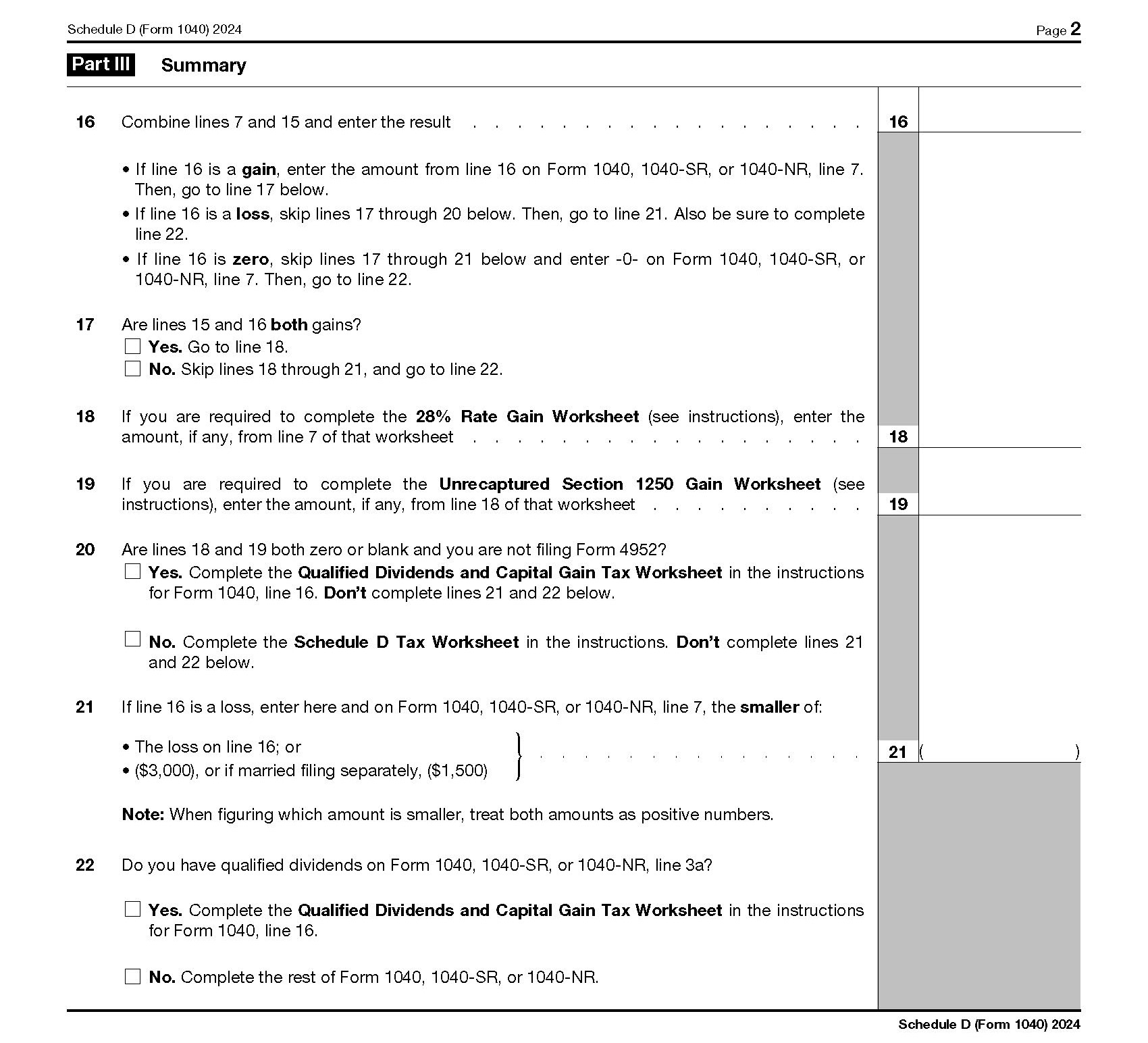
IRS Form 1040 Schedule D is a crucial document for individual taxpayers, used to report capital gains and losses from the sale of assets such as stocks, bonds, and real estate. This form plays a significant role in ensuring accurate tax reporting and compliance with federal tax laws. Understanding how to properly complete Schedule D is essential for taxpayers to avoid penalties and maximize potential tax benefits.
Understanding IRS Form 1040 Schedule D 2027
Key Changes in Schedule D for 2027
For the tax year 2027, there are several important updates to IRS Form 1040 Schedule D:
- Increased Reporting Thresholds: The thresholds for reporting certain transactions have been adjusted, requiring taxpayers to be more vigilant about their reporting obligations.
- New Exemption Rules: Certain exemptions for small asset sales have been modified, impacting how gains are calculated.
- Updated Definitions: Clarifications on what constitutes short-term versus long-term capital gains have been provided, affecting tax rates applicable to different types of gains.
Who Needs to File Schedule D?
Taxpayers are required to file Schedule D if they meet any of the following criteria:
- Sold stocks or bonds during the tax year.
- Disposed of real estate or other capital assets.
- Received capital gains distributions from mutual funds or other investments.
- Engaged in transactions involving cryptocurrency or other digital assets.
How to Complete Schedule D: A Step-by-Step Guide
Completing IRS Form 1040 Schedule D involves several key steps:
- Gather Documentation: Collect all relevant documents, including brokerage statements and records of asset purchases and sales.
- Identify Capital Gains and Losses: Determine which assets were sold and calculate the gain or loss for each transaction. Remember:
- Short-term capital gains: Assets held for one year or less.
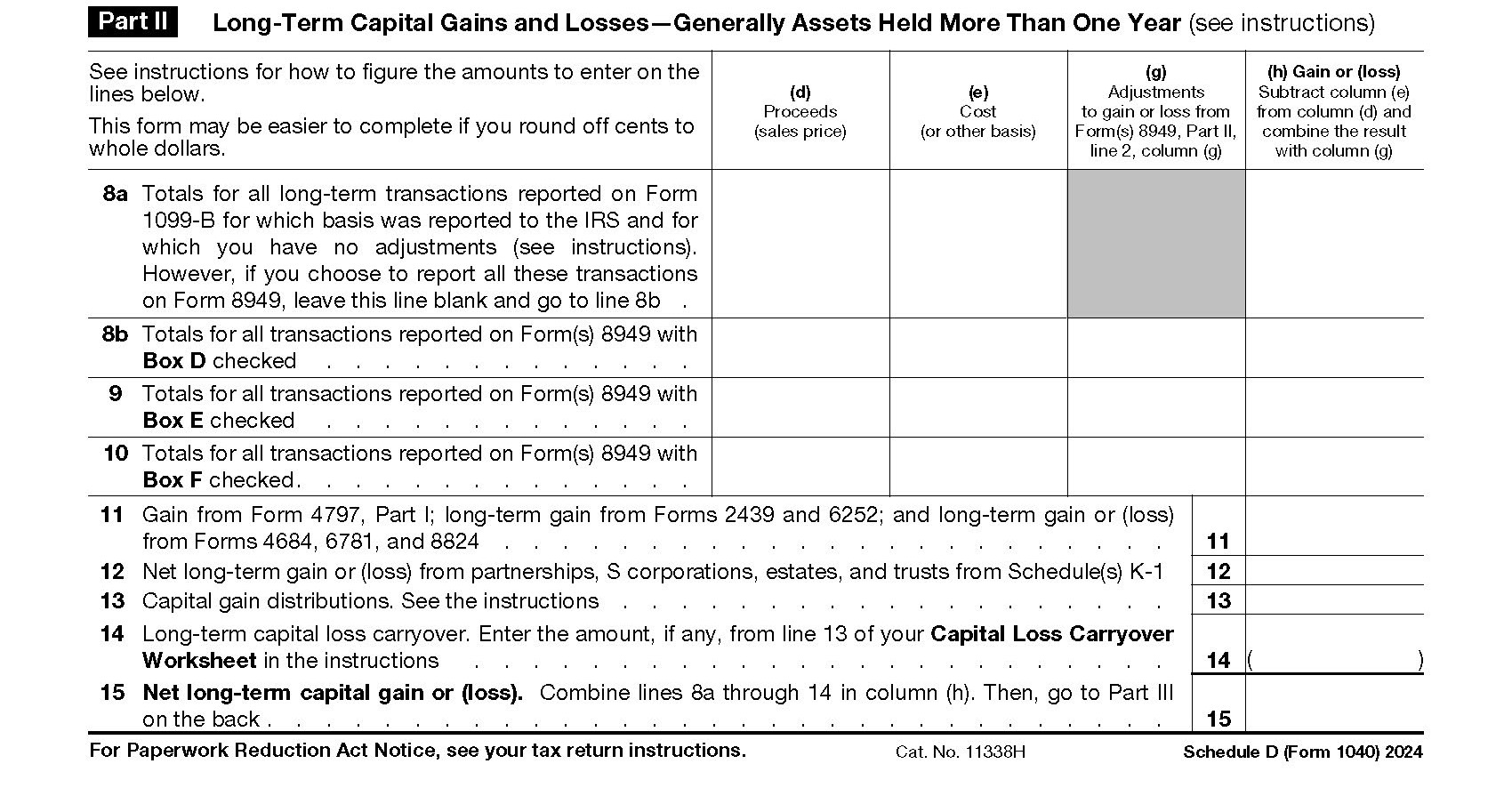
- Long-term capital gains: Assets held for more than one year.
- Complete Part I: Report short-term capital gains and losses. List each transaction with details such as date acquired, date sold, proceeds, cost basis, and gain/loss.
- Complete Part II: Report long-term capital gains and losses using the same format as Part I.
- Total Your Gains and Losses: Calculate the totals from both parts and determine your overall capital gain or loss.
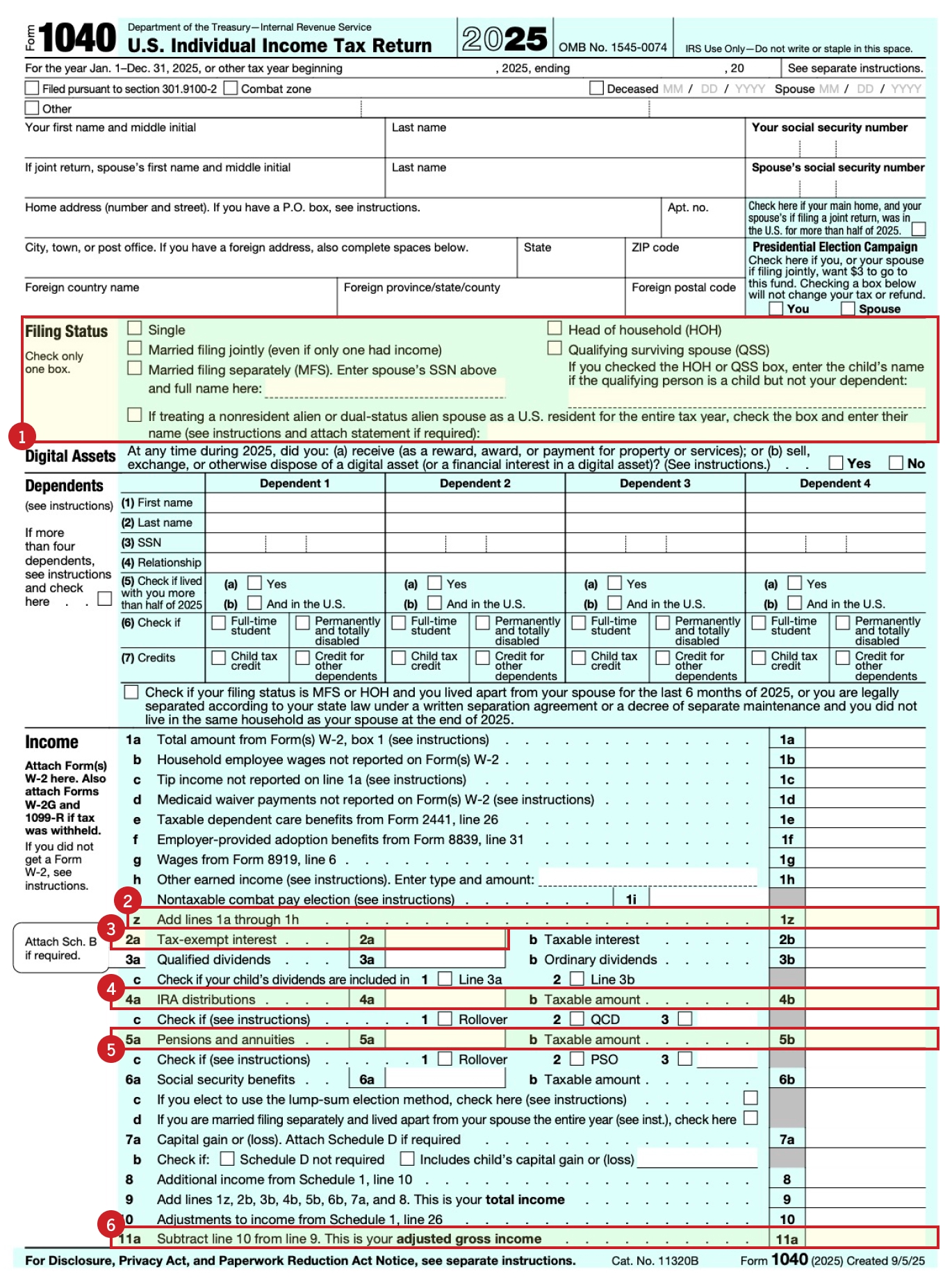
- Transfer Results: Transfer the net gain or loss to your Form 1040 as instructed.
Practical Tips:
- Keep detailed records of all transactions to support your reported figures.
- If you have both short-term and long-term gains, be aware of how they are taxed differently.
- Consider potential deductions or credits that may apply to your situation when completing the form.
By following these steps and understanding the requirements of IRS Form 1040 Schedule D, taxpayers can ensure accurate reporting of their capital gains and losses for the tax year 2027.