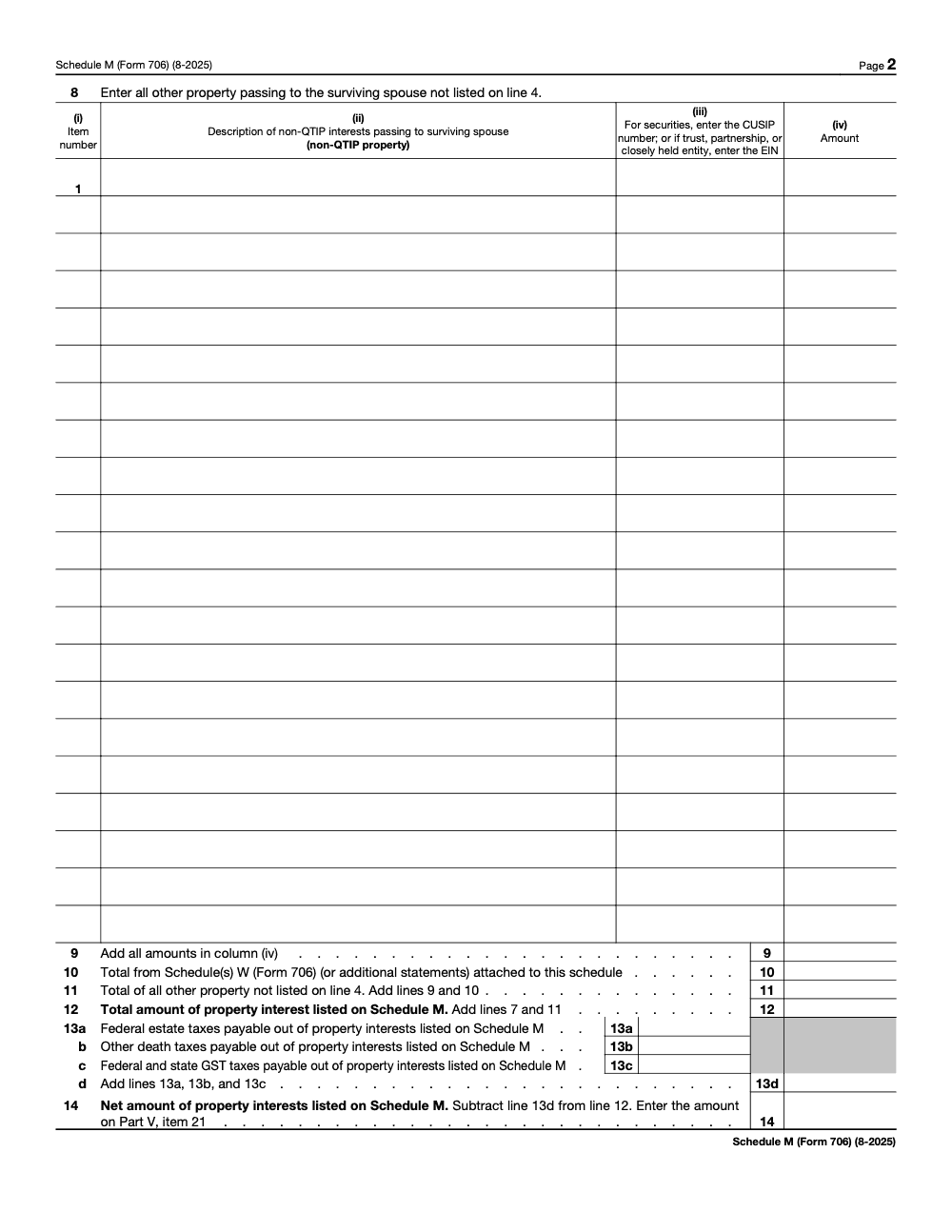
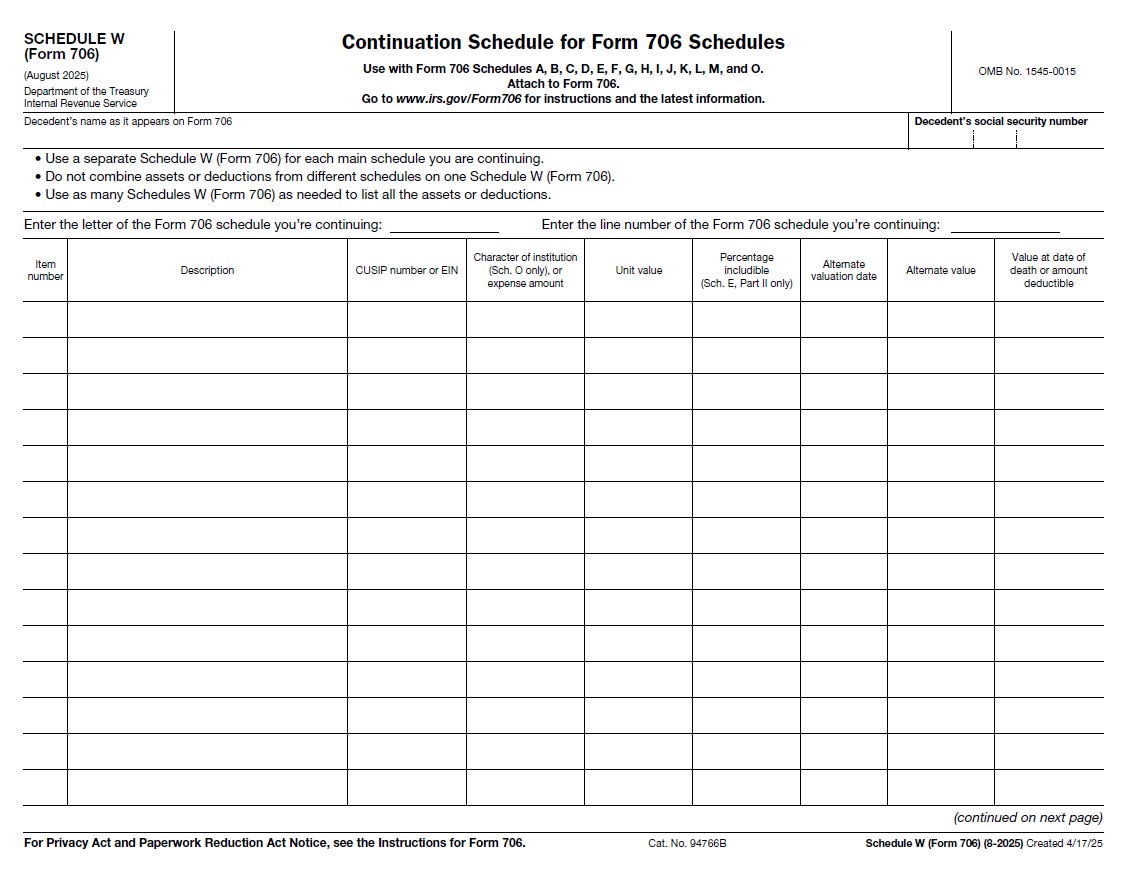
Form 706 is a crucial document for estate tax filings, particularly for reporting the value of an estate and calculating any taxes owed. Schedule M plays a significant role in this process by allowing taxpayers to report property transfers to spouses, which can help reduce the overall estate tax liability. Understanding how to properly complete this form is essential for effective estate planning.
Understanding Schedule M
Schedule M is a section of Form 706 specifically designed to report property that is transferred between spouses. It is required for estates that exceed the federal estate tax exemption limit. The types of property that should be reported include real estate, financial assets, and other valuable items. According to IRS guidelines, any transfer that qualifies for the marital deduction must be documented on this schedule.
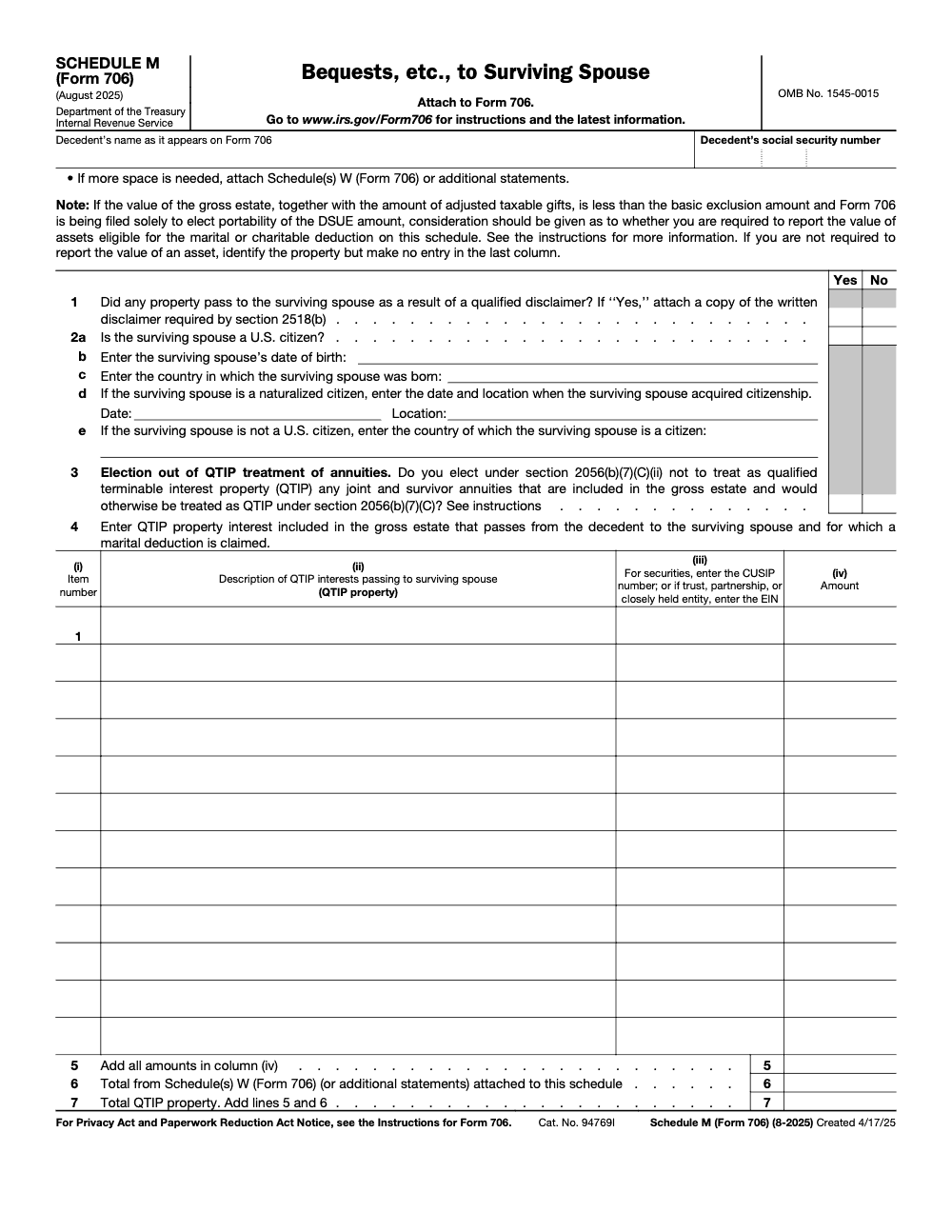
Marital deductions are vital as they allow certain transfers between spouses to be excluded from taxable estates, thereby reducing the estate tax liability. Schedule M facilitates this by providing a structured way to report these transfers accurately.
Examples of Completing Schedule M
Consider a scenario where one spouse transfers a piece of real estate valued at $500,000 to the other spouse. This transfer would need to be reported on Schedule M. For instance, if the estate includes financial assets worth $200,000 also transferred to the spouse, both amounts should be documented clearly on the form.
To fill out Schedule M, start by entering the names and details of both spouses in the designated sections. Next, list each property transfer along with its fair market value. Ensure that all relevant information is accurate to avoid common mistakes such as misreporting values or omitting necessary details.
Practical Considerations and Resources
When completing Form 706 and Schedule M, individuals should consider seeking professional assistance from tax advisors or estate planners who specialize in this area. Utilizing IRS resources can also provide valuable guidance. Accurate record-keeping is essential for substantiating claims made on the form and ensuring compliance with IRS regulations.
For further information, readers can refer to IRS publications such as Publication 559 or consult estate planning guides that offer insights into the complexities of filing Schedule M.