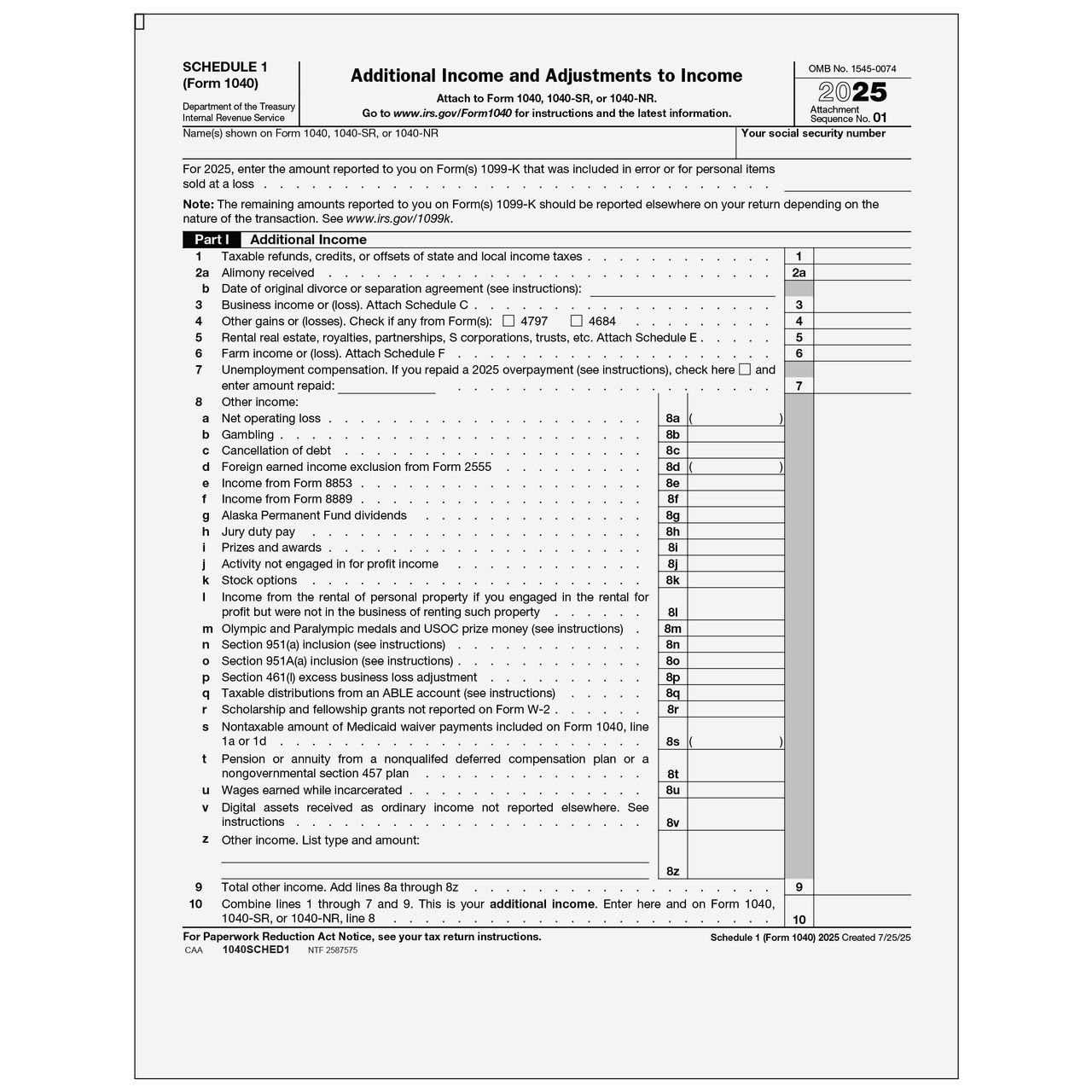
The 2027 IRS Form 1040 S Schedule 1 plays a crucial role in the tax filing process for individual taxpayers by allowing them to report additional income and adjustments to income. This form is essential for accurately calculating taxable income, ensuring that taxpayers meet their obligations while maximizing potential deductions. Understanding how to properly complete Schedule 1 can significantly impact your overall tax liability.
Understanding the 2027 IRS Form 1040 S Schedule 1
The 2027 IRS Form 1040 S Schedule 1 is an attachment to the standard Form 1040, designed specifically for reporting various types of additional income and adjustments to income. Taxpayers who have sources of income beyond wages, salaries, or tips must file this form. Common situations requiring Schedule 1 include receiving unemployment compensation, rental income, or certain business earnings.
Eligibility criteria for filing Schedule 1 typically include:
- Individuals with additional income sources.
- Taxpayers claiming specific adjustments such as educator expenses or student loan interest deductions.
For example, if you received unemployment benefits during the year or earned money from a side business, you would need to report this on Schedule 1.
Key Sections of Schedule 1
Schedule 1 consists of two main sections: additional income and adjustments to income.
- Additional Income: This section includes various sources such as:
- Unemployment compensation
- Rental income
- Business income (from self-employment)
- Other forms of income like alimony received or capital gains
- Adjustments to Income: This section allows taxpayers to claim deductions that reduce their taxable income, including:
- Educator expenses
- Student loan interest deductions
- Health savings account contributions
- Moving expenses for active-duty military members
When filling out each section, it’s important to keep accurate records and documentation. Common mistakes include misreporting amounts or failing to include all applicable income sources. Double-checking entries can help avoid errors that may lead to audits or penalties.
Filing Tips for Schedule 1
To ensure a smooth filing process for Schedule 1, consider the following tips:
- Deadlines: Be aware of the tax filing deadline, typically April 15th, unless extended.
- Gather Documentation: Collect all necessary documents such as W-2s, 1099s, and receipts for deductions.
- Keep Accurate Records: Maintain organized records throughout the year to simplify the filing process.
- Seek Assistance: Utilize IRS resources like publications or local tax assistance centers if you need help understanding the form.
By following these guidelines and understanding the components of Schedule 1, taxpayers can effectively navigate their tax obligations and optimize their filings for the year 2027.